What is the best strength training program?

The best strength training program is not the most complicated one; it is the one you can follow consistently, progress safely, and adapt to your body, goals, and schedule. A good plan trains the major movement patterns, balances effort with recovery, and gives you a clear way to get stronger over time. If you have ever typed “What is the best strength training program?” into a search bar, the honest answer is: the best program is structured, repeatable, and realistic for you.
What makes a strength training program the best?
A strength training program is “best” when it matches your experience level, supports your goals, and includes a sensible progression plan. Beginners usually need a simple full-body routine with basic exercises and enough practice to build skill. More advanced lifters may need more weekly volume, planned variations, and carefully managed recovery.
The right program should answer four questions clearly: what exercises you will do, how often you will train, how hard each set should feel, and how you will progress. Without those pieces, workouts can become random. Random training may feel productive in the moment, but it is harder to measure, adjust, or sustain.
A strong program also respects your life outside the gym. Sleep, stress, nutrition, work demands, and joint comfort all affect performance. A plan that looks perfect on paper but leaves you exhausted, sore, or unable to show up regularly is not the best plan for your real life.
The core ingredients of an effective plan
Most effective strength programs share the same foundations, even when the exercises or weekly schedules look different. You do not need every machine, trend, or advanced method to build strength. You need enough quality work, performed consistently, with gradual challenge.
Key ingredients include:
Compound movement patterns: Squats, hinges, pushes, pulls, lunges, carries, and core work train the body in useful, coordinated ways.
Progressive overload: Over time, you increase the challenge through more weight, more reps, more sets, better control, or harder variations.
Appropriate frequency: Most people do well training each major muscle group more than once per week, but the exact split depends on recovery and schedule.
Recovery built in: Rest days, easier sessions, warm-ups, and sleep all help your body adapt instead of simply accumulate fatigue.
Exercise consistency: Repeating key lifts long enough allows you to improve technique and track progress.
Room for adjustment: A good program has structure, but it also allows substitutions when equipment, pain, or time becomes an issue.
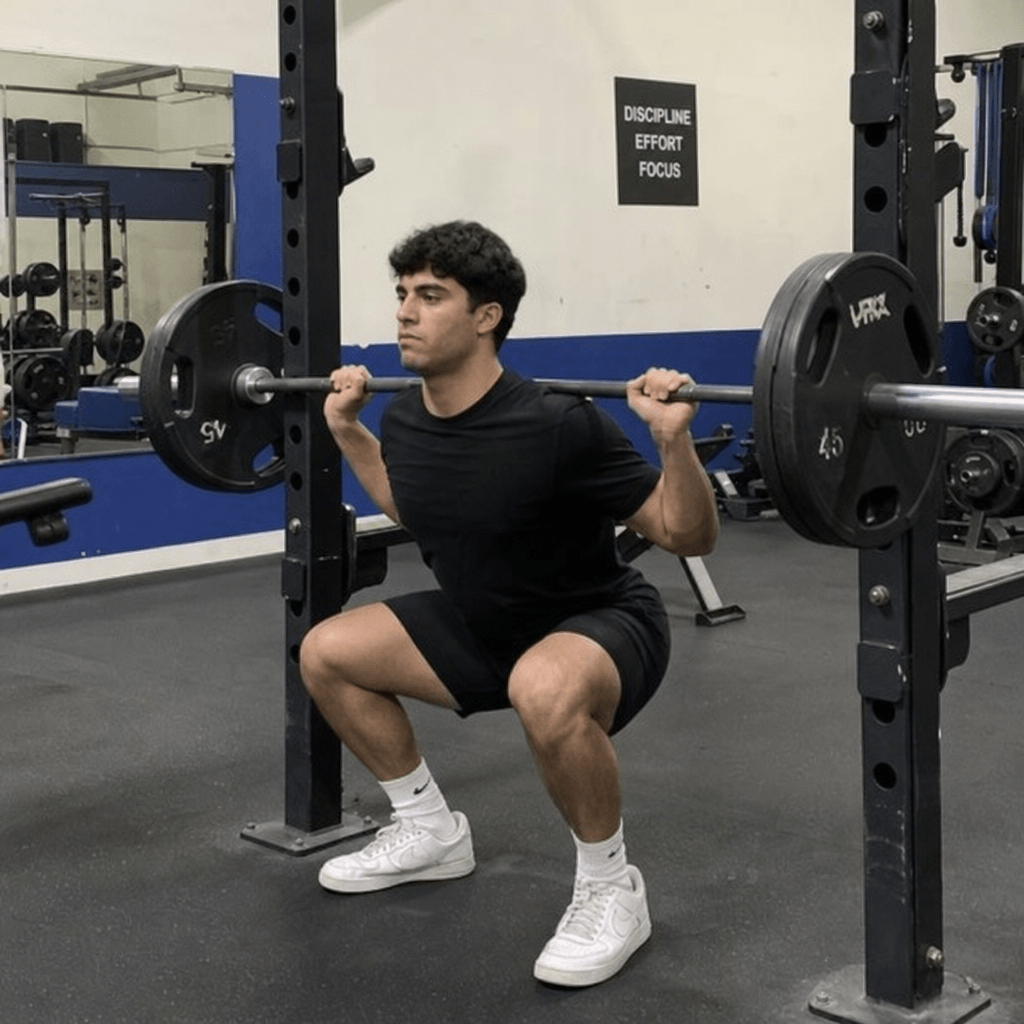
Should beginners use full-body training or split routines?
Beginners are usually best served by full-body training because it provides frequent practice, efficient workouts, and balanced development. A full-body plan can train the legs, hips, back, chest, shoulders, arms, and core in two to four sessions per week. This keeps the routine simple while still giving the body repeated chances to learn the major lifts.
Split routines, such as upper/lower or push/pull/legs, can also work well. They become more useful when you want more exercise variety, more total weekly volume, or shorter sessions focused on fewer muscle groups. However, a split is not automatically better. If it makes your schedule harder or spreads your energy too thin, it may reduce consistency.
For many people, the best starting point is three full-body sessions per week. That schedule gives you enough training stimulus while leaving recovery days between workouts. Once you are comfortable with the basics, you can move toward an upper/lower split or a more specific plan if your goals require it.
A practical weekly structure that works
You can build a strong program without making it complicated. The goal is to cover the main movement patterns, practice good technique, and leave each session feeling challenged but not destroyed.
Here is a simple three-day full-body structure:
Day 1: Squat emphasis
Squat or leg press
Bench press or push-up
Row variation
Romanian deadlift or hip hinge
Plank or loaded carry
Day 2: Hinge emphasis
Deadlift variation or hip thrust
Overhead press
Lat pulldown or assisted pull-up
Split squat or lunge
Anti-rotation core exercise
Day 3: Balanced full-body session
Front squat, goblet squat, or step-up
Incline press or dumbbell press
Seated row or cable row
Hamstring curl or glute bridge
Farmer’s carry or side plank
For most main exercises, use a rep range that allows good form, such as moderate sets of controlled reps. Isolation exercises can be added for arms, shoulders, calves, or specific weak points, but they should support the program rather than crowd out the main lifts.
How do you know if your program is working?
Your program is working if your technique is improving, your key lifts are gradually progressing, and you feel capable of recovering between sessions. Progress does not have to mean adding weight every workout. It can also mean doing the same weight with cleaner form, completing more reps, needing less rest, or feeling more stable and confident.
Track a few basic markers:
Performance: Are you lifting more weight, doing more reps, or moving with better control over time?
Consistency: Are you completing most planned sessions each week?
Recovery: Do you feel ready to train again after rest days?
Joint comfort: Are exercises challenging muscles without creating persistent pain?
Energy and motivation: Does the plan feel demanding but sustainable?
If several of these markers are moving in the wrong direction, the program may need adjustment. You might be doing too much too soon, choosing exercises that do not fit your body, or missing recovery basics. Small changes often work better than abandoning the entire plan.
Common mistakes that hold people back
One of the biggest mistakes is program hopping. Switching routines every week makes it difficult to know what is actually working. Variety can be useful, but strength improves when you repeat important skills and give your body time to adapt.
Another common issue is training every set to absolute failure. Hard effort matters, but constantly pushing to the limit can make recovery harder and technique less reliable. Most sessions should leave a little room in reserve, especially on heavy compound lifts.
People also underestimate warm-ups and setup. A few minutes of easy movement, lighter ramp-up sets, and focused practice can improve the quality of your work. Strength training is not just about moving weight; it is about moving weight well.
Choosing the best program for your goal
Different goals require different emphasis. If your main goal is general strength and fitness, a balanced full-body or upper/lower program is usually enough. If your goal is powerlifting, you will need more specific practice with the squat, bench press, and deadlift. If muscle growth is the priority, you may include more total volume, more exercise variety, and closer attention to individual muscle groups.
Use this simple checklist before committing to a plan:
Can you follow it for at least eight to twelve weeks?
Does it train the whole body, not just favorite muscles?
Are the exercises realistic with your equipment and skill level?
Does it include a clear way to progress?
Does it allow enough rest between hard sessions?
Can you modify it if you feel pain or your schedule changes?
If the answer is mostly yes, you likely have a solid program. If not, simplify before you intensify.
The best program is the one you can repeat and improve
So, what is the best strength training program? It is a structured plan that fits your life, trains the major movement patterns, progresses gradually, and keeps you healthy enough to keep showing up. For many people, that starts with a simple full-body routine performed two to four times per week.
Do not chase the perfect template at the expense of consistency. Choose a plan, track your work, practice good form, and make small improvements over time. Strength is built through repeated effort, not constant reinvention.