What exercises are best for muscle growth?
Building muscle takes more than lifting weights or spending hours at the gym. The best exercises for muscle growth are movements that challenge your muscles, allow you to increase resistance over time, and fit into a balanced workout routine.
Whether you want bigger arms, a stronger chest, wider shoulders, or more developed legs, choosing the right exercises can help you make steady progress. A combination of compound movements and isolation exercises is an effective way to train your major muscle groups and support overall muscle development.
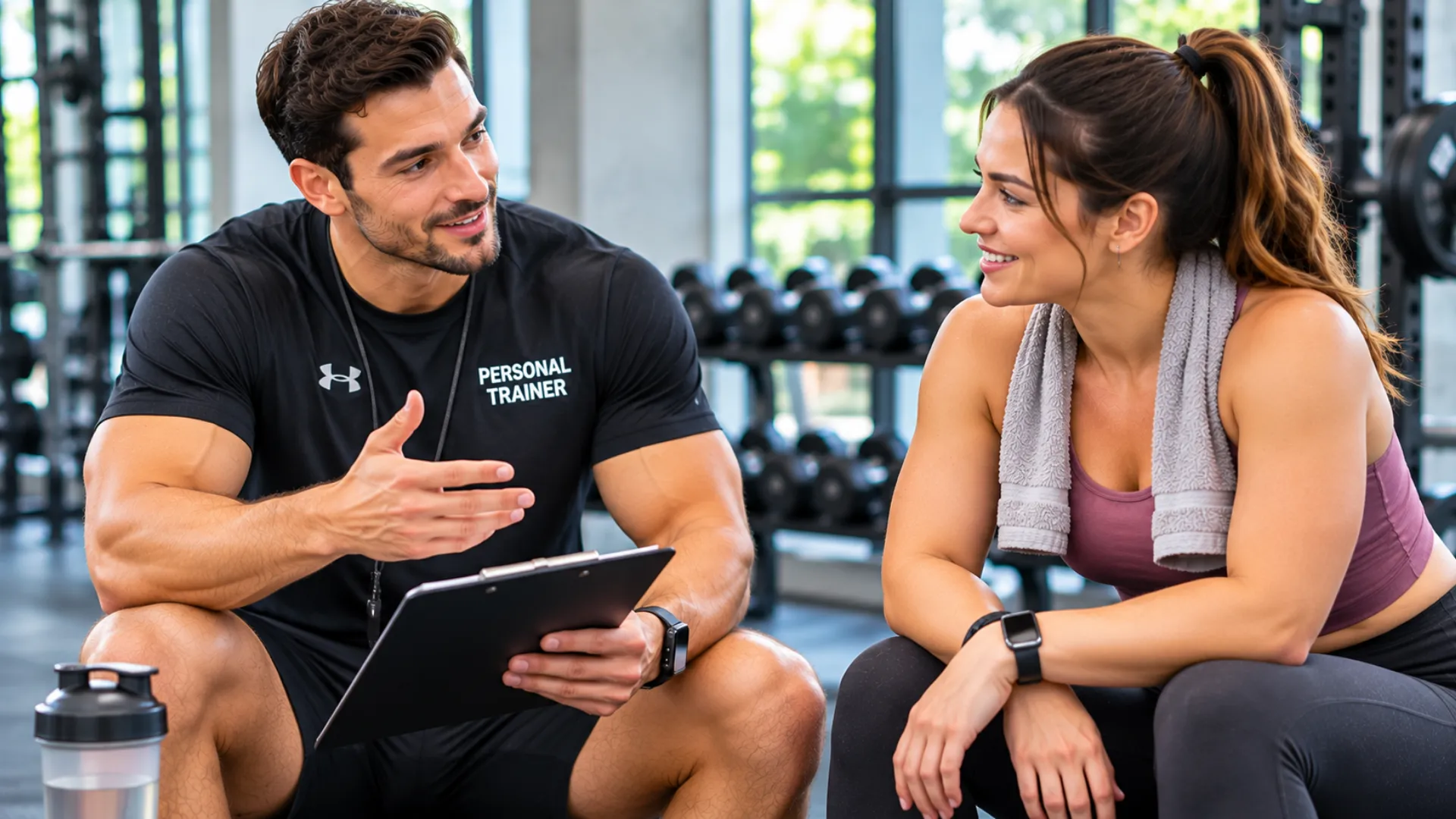
At Franklin Personal Training, a structured strength training program can help you choose exercises that match your fitness level, goals, and schedule.
What Are the Best Exercises for Muscle Growth?
The most effective exercises for muscle growth are resistance-based movements that work your muscles through a controlled range of motion. Compound exercises are particularly useful because they train several muscle groups at once, while isolation exercises allow you to focus on specific muscles.
Here are some of the best exercises to include in a muscle-building routine.
1. Squats for Bigger Legs and Stronger Glutes
Squats are among the best lower-body exercises for building muscle. They primarily target the quadriceps and glutes while also engaging the hamstrings and core.
You can perform different squat variations depending on your experience and available equipment:
Bodyweight squats: A good starting point for beginners learning proper technique.
Goblet squats: Holding a dumbbell in front of your chest adds resistance while helping you maintain an upright position.
Barbell back squats: Allow you to progressively increase resistance as your strength improves.
Start with a manageable weight and focus on controlled movement. As your technique improves, gradually increase the resistance or repetitions.
2. Deadlifts for Hamstrings, Glutes, and Back
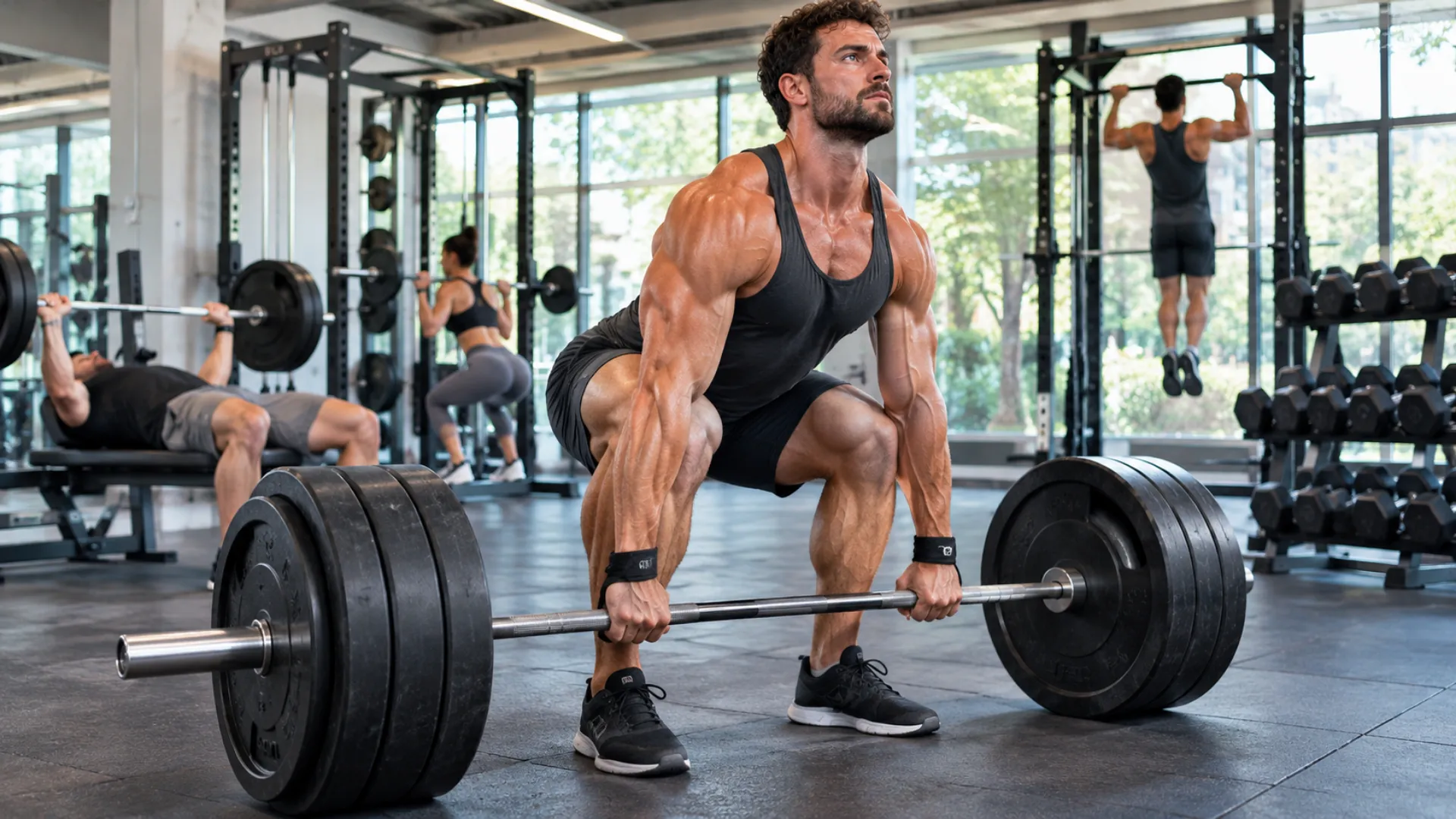
Deadlifts are compound exercises that develop strength throughout the posterior chain, including the hamstrings, glutes, and back muscles.
They also train your grip and core stability. Different variations allow you to emphasize particular muscle groups:
Conventional deadlifts
Romanian deadlifts
Dumbbell deadlifts
Trap-bar deadlifts
Romanian deadlifts are especially useful for targeting the hamstrings and glutes. Whichever variation you choose, maintain a stable spine and learn the correct hip-hinge movement before increasing the weight.
3. Bench Press for Chest, Shoulders, and Triceps
The bench press is one of the most popular exercises for upper-body muscle growth. It primarily works the chest while recruiting the shoulders and triceps.
You can use a barbell or dumbbells depending on your experience and equipment.
Try these variations:
Flat bench press for general chest development
Incline bench press to emphasize the upper chest
Dumbbell bench press for independent arm movement
Close-grip bench press to place more emphasis on the triceps
Use a weight you can control throughout the entire repetition. Avoid bouncing the bar off your chest or allowing your shoulders to lose their stable position.
4. Pull-Ups and Lat Pulldowns for a Wider Back
Pull-ups and lat pulldowns are excellent exercises for developing the latissimus dorsi, commonly known as the lats. These muscles contribute to a wider-looking back.
Pull-ups use your body weight as resistance, making them challenging for beginners. If you cannot perform a full pull-up yet, try assisted pull-ups or lat pulldowns.
For better results:
Pull with control instead of swinging your body.
Keep your shoulders stable.
Avoid using momentum to complete repetitions.
Focus on moving through a comfortable, controlled range of motion.
Lat pulldowns are a practical alternative because you can adjust the resistance to match your current strength.
5. Rows for Back Thickness and Strength
Rowing exercises target several upper-back muscles, including the rhomboids and trapezius, while also engaging the lats and biceps.
Good options include:
Bent-over barbell rows
Single-arm dumbbell rows
Seated cable rows
Chest-supported rows
Rows complement pressing exercises by developing your pulling strength. Include at least one rowing variation in your upper-body routine to support balanced muscle development.
6. Overhead Press for Shoulder Growth
The overhead press is a compound movement that primarily targets the deltoids, with assistance from the triceps and upper chest.
You can perform it using a barbell, dumbbells, or a suitable machine.
Dumbbell shoulder presses are useful because each arm works independently. This can help you identify strength differences between sides.
Keep your core engaged and avoid arching your lower back excessively. Start with a resistance level that allows you to press smoothly without losing control.
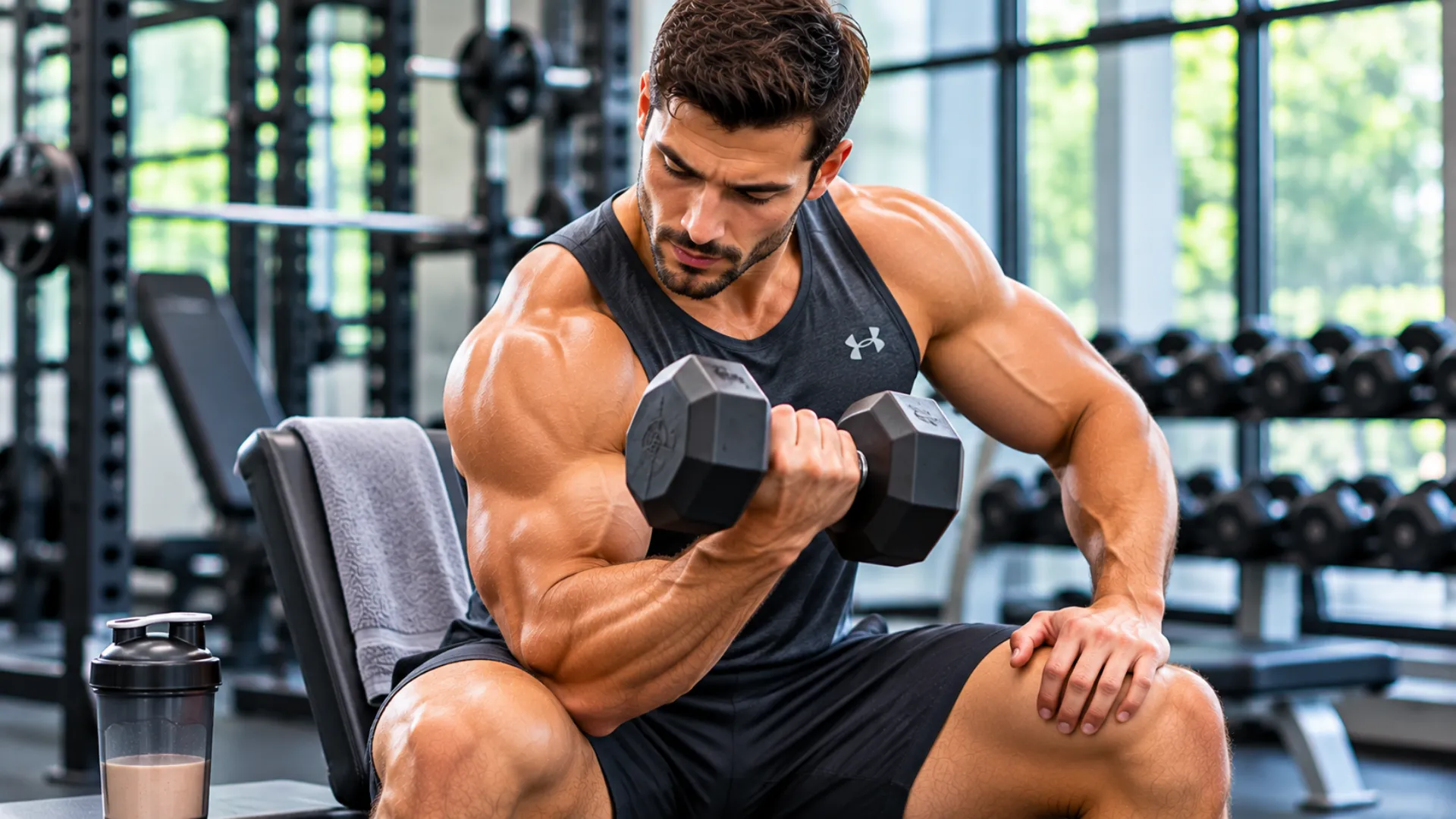
7. Bicep Curls for Bigger Arms
Bicep curls are isolation exercises that directly target the biceps. They are useful for adding focused arm training to a routine that already includes compound pulling movements.
Popular variations include:
Standing dumbbell curls
Hammer curls
Barbell curls
Cable curls
Avoid swinging your upper body to lift heavier weights. Keep your elbows relatively stable and lower the resistance under control.
8. Tricep Pushdowns for Upper-Arm Development
The triceps make up a substantial portion of your upper-arm muscle mass. Training them directly can help develop stronger, more muscular arms.
Cable tricep pushdowns are a simple option for beginners and experienced lifters. Other useful exercises include overhead tricep extensions and close-grip presses.
Keep your elbows close to your sides during pushdowns and avoid using your shoulders to move the weight.
9. Lunges for Legs and Glutes
Lunges train the quadriceps and glutes while challenging balance and coordination. Because each leg works independently, they can also help address differences in strength between sides.
Try:
Forward lunges
Reverse lunges
Walking lunges
Dumbbell lunges
Beginners can start with bodyweight lunges before adding dumbbells. Use a comfortable step length and maintain control as you lower and raise your body.
10. Lateral Raises for Shoulder Width
Lateral raises are isolation exercises that primarily target the side deltoids. Developing this area can contribute to broader-looking shoulders.
Use dumbbells or a cable machine and raise your arms outward with a slight bend in your elbows. Choose a manageable weight because using excessive resistance often leads to swinging and poor technique.
Controlled repetitions are more useful than lifting heavier weights with momentum.
How Many Sets and Reps Should You Do for Muscle Growth?
There is no single repetition range that works for everyone. Muscle growth can occur across a range of loads when sets are sufficiently challenging and performed with proper technique.
A practical starting point is:
Compound exercises: 2–4 sets of approximately 6–12 repetitions.
Isolation exercises: 2–3 sets of approximately 10–15 repetitions.
Training frequency: Train each major muscle group around twice per week, adjusting based on your experience and recovery.
Choose a resistance that makes the final repetitions challenging without forcing you to sacrifice good form. You do not need to reach complete muscular failure on every set.
Beginners should start with manageable training volume and increase it gradually as their strength and technique improve.
Why Progressive Overload Matters for Muscle Growth
Doing the same workout with the same resistance indefinitely can make continued progress difficult. Your muscles need an appropriate challenge to keep adapting.
This is where progressive overload comes in.
Progressive overload means gradually increasing the demands placed on your muscles. You can do this by:
Adding a small amount of weight.
Performing more repetitions with the same resistance.
Adding a set when your recovery allows.
Improving your range of motion and exercise control.
Using a more challenging exercise variation.
For example, if you can comfortably perform three sets of 10 dumbbell presses with good technique, you may gradually increase the weight or work toward completing more repetitions.
Keep a workout log so you can track improvements rather than guessing whether your training is working.
Do You Need to Combine Compound and Isolation Exercises?
Yes. Both exercise types have a place in an effective muscle-building program.
Compound exercises such as squats, bench presses, deadlifts, and rows train multiple muscle groups simultaneously. They help develop overall strength and provide an efficient foundation for your workouts.
Isolation exercises such as bicep curls, lateral raises, and tricep pushdowns allow you to give individual muscles additional attention.
A balanced routine generally starts with larger compound movements before adding isolation exercises to target specific areas.
How Nutrition and Recovery Support Muscle Growth
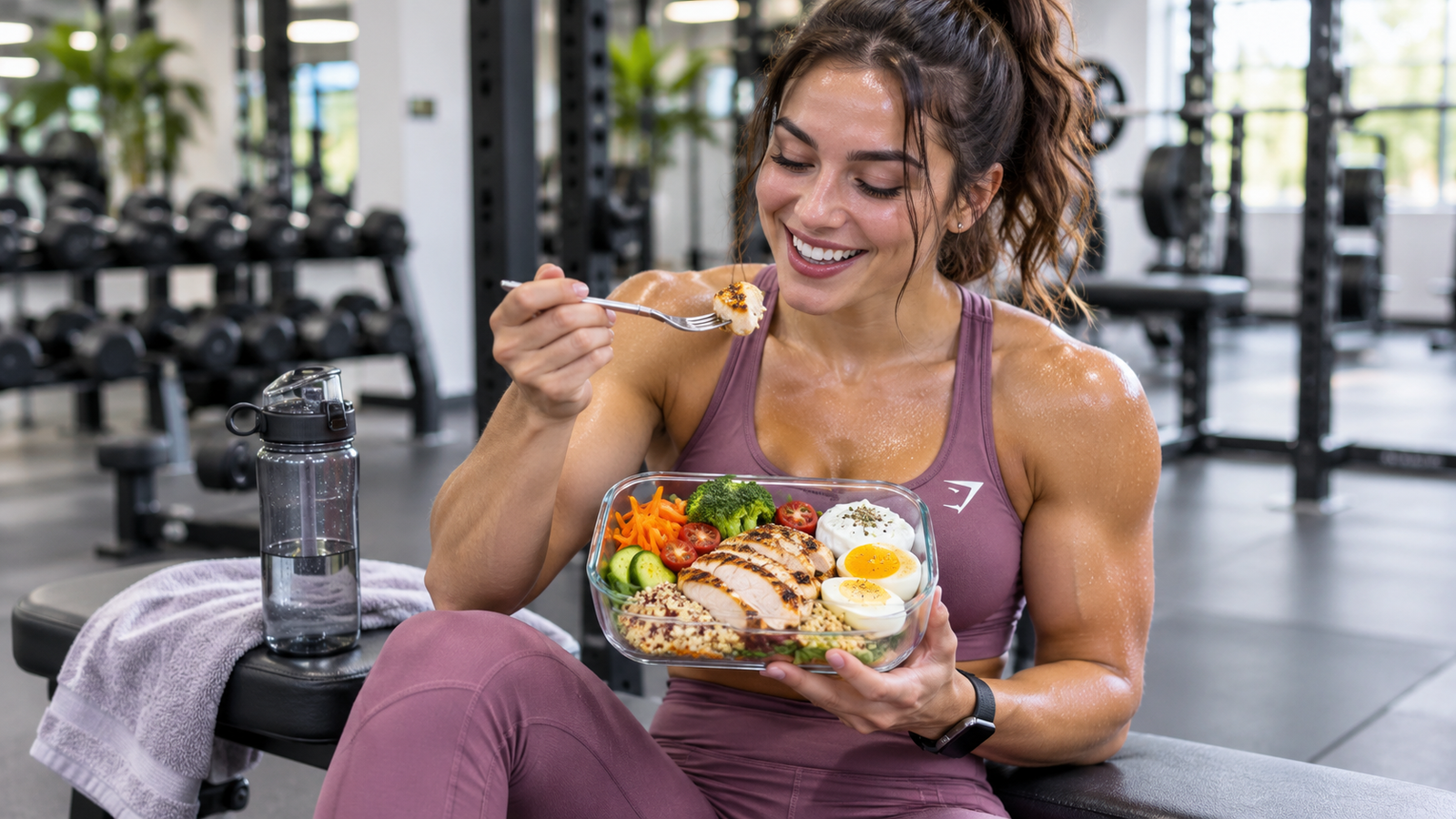
Your workout provides the stimulus for muscle growth, but your body also needs enough food, protein, and recovery time to adapt.
Keep these habits in mind:
Eat enough protein. Protein provides amino acids that your body uses to repair and build muscle tissue. Many people who strength train can aim for approximately 1.4–2.0 grams of protein per kilogram of body weight per day.
Get enough calories. Consistently eating too little can make it harder to support muscle growth. Your calorie needs depend on your body size, activity level, and goals.
Prioritize sleep. Aim for around seven to nine hours of sleep each night when possible.
Allow recovery time. Avoid training the same muscles intensely every day. Give them enough time to recover before another demanding session.
Training consistently while neglecting nutrition and recovery can limit your results.
Sample Full-Body Workout for Muscle Growth
If you are unsure where to start, this beginner-friendly routine covers the major muscle groups.
| Exercise | Sets | Reps |
|---|---|---|
| Goblet Squats | 3 | 8–12 |
| Dumbbell Bench Press | 3 | 8–12 |
| Lat Pulldowns | 3 | 10–12 |
| Romanian Deadlifts | 2 | 10–12 |
| Dumbbell Shoulder Press | 2 | 10–12 |
| Dumbbell Bicep Curls | 2 | 10–15 |
| Plank | 2 | 20–40 seconds |
Perform this routine two or three times per week, leaving recovery time between demanding sessions. Adjust the exercises and resistance to your ability, and ask a qualified trainer to check your technique if you are unfamiliar with any movement.
Frequently Asked Questions About Exercises for Muscle Growth
What is the number one exercise for building muscle?
There is no single best exercise for every muscle group. Squats, deadlifts, bench presses, rows, and overhead presses are excellent compound movements for developing overall muscle and strength.
Can I build muscle with dumbbells?
Yes. Dumbbells can build muscle effectively when you use appropriate resistance, perform controlled repetitions, and gradually increase the challenge. Exercises such as dumbbell squats, presses, rows, lunges, and curls can train your entire body.
How many days a week should I work out to build muscle?
Many beginners can start with two or three full-body strength training sessions per week. More experienced individuals may benefit from four or more sessions, depending on their workout structure and recovery.
Should I lift heavy weights to build muscle?
You do not always need extremely heavy weights. Muscle growth can happen with lighter or heavier resistance when you perform sufficiently challenging sets with good technique. Choose a load that matches your experience and allows controlled repetitions.
How long does it take to see muscle growth?
Strength improvements may appear within the first few weeks, while visible muscle development often takes several months. Your results depend on training consistency, nutrition, sleep, genetics, and starting fitness level.
Build Muscle With a Training Plan That Works for You
The best exercises for muscle growth are the ones that train your major muscle groups effectively and allow you to make consistent progress. Squats, deadlifts, presses, rows, pull-ups, curls, and lunges can all play a role in a well-designed routine.
However, choosing exercises is only one part of the process. You also need the right training schedule, appropriate resistance, proper technique, and enough recovery.
At Franklin Personal Training, you can get guidance on building a workout routine around your fitness goals and current ability. Whether you are new to strength training or looking to improve your existing program, a personalized approach can help you train with more direction.
Ready to build muscle and get stronger? Contact Franklin Personal Training today to schedule a consultation and take the next step toward your fitness goals.